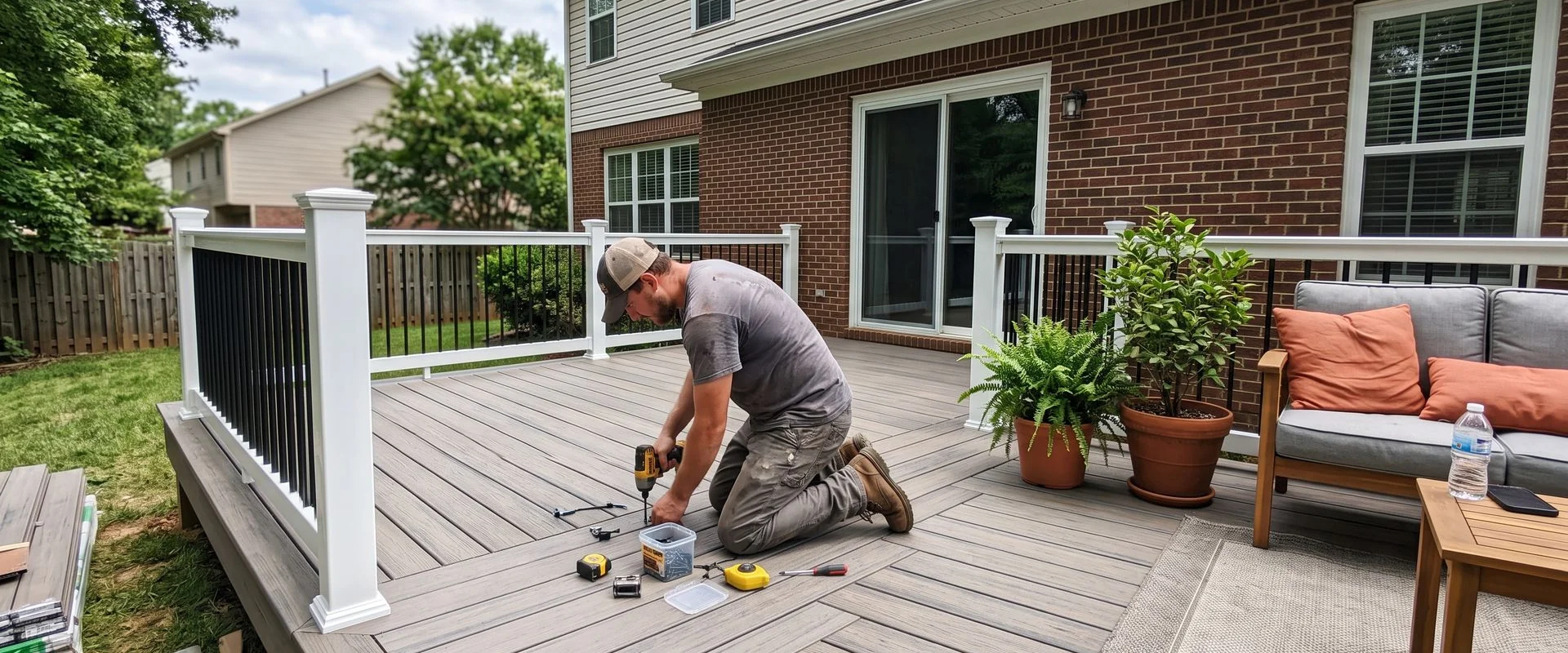
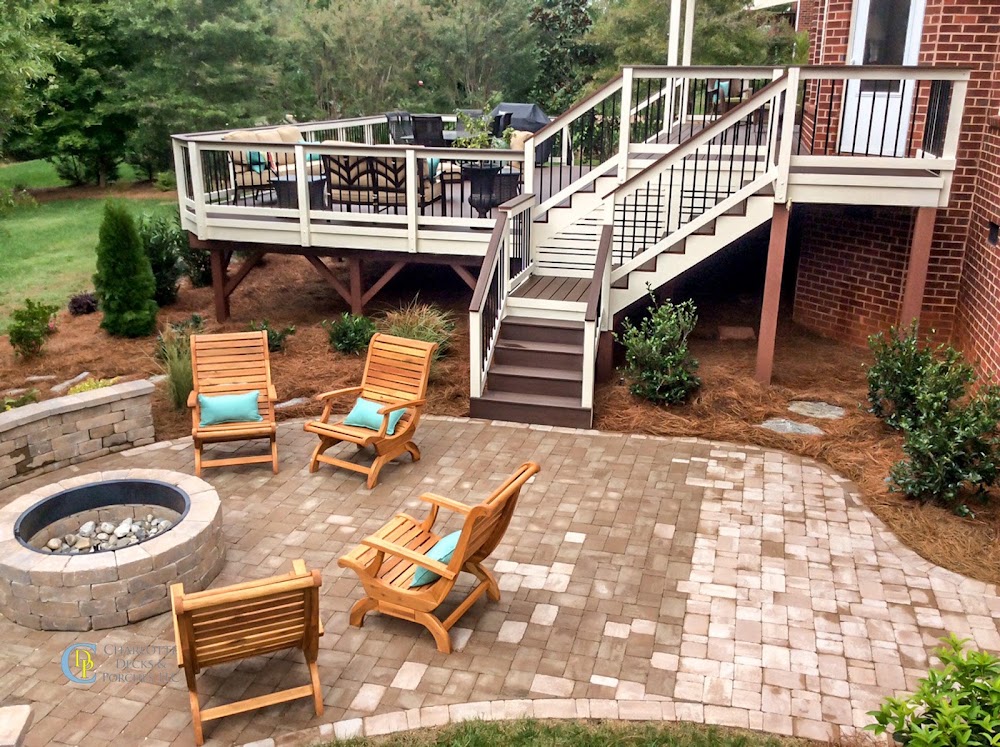
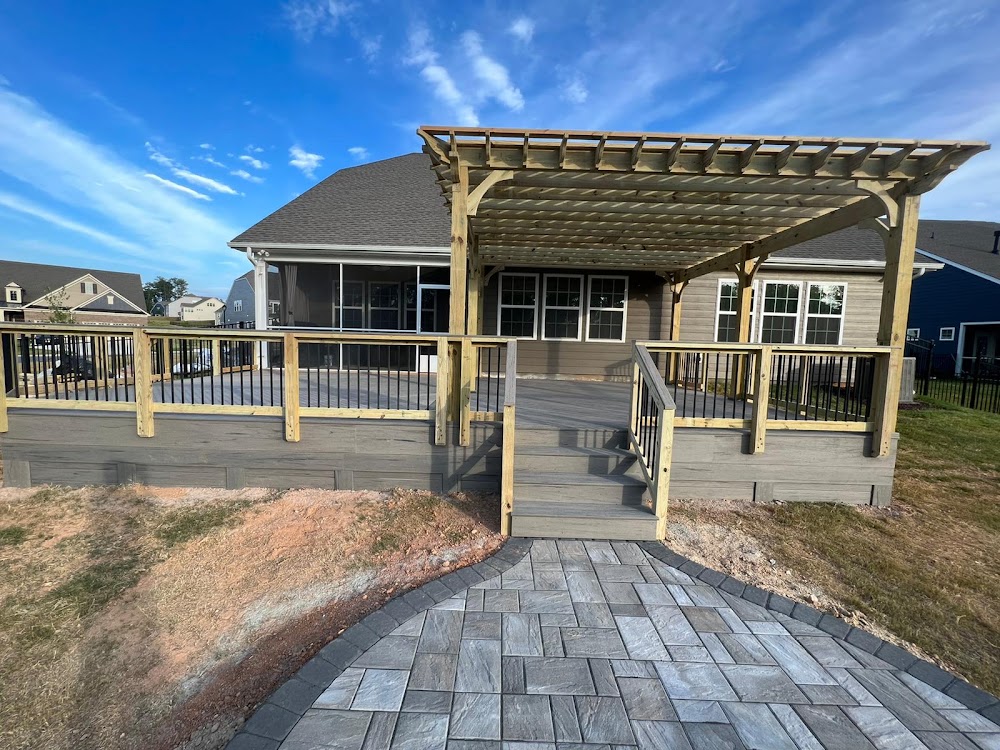
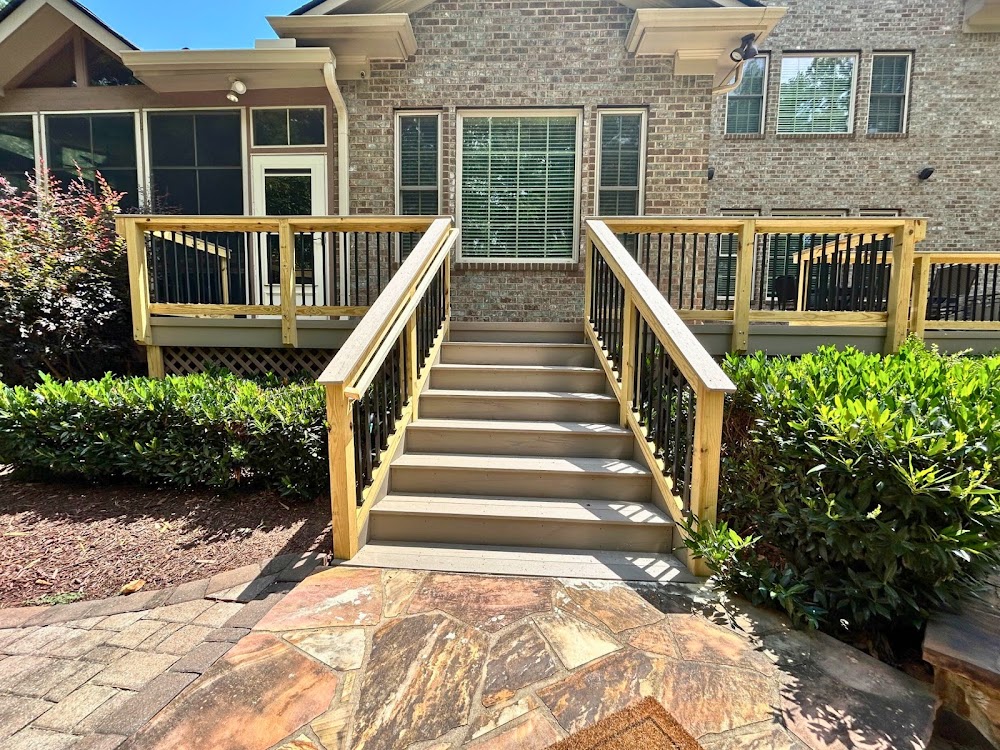
Composite decking, Trex being the best-known brand, has become the default choice for Charlotte homeowners who want a deck without the yearly sanding and staining that comes with pressure-treated wood. The boards are made from a mix of wood fiber and recycled plastic, capped with a protective shell that resists fading, staining, mold, and the freeze-thaw swings and humid summers that are hard on a wood deck in the Piedmont. The tradeoff is upfront cost: composite material runs higher than pressure-treated lumber, though it usually wins out over a 15-20 year span once you factor in maintenance.
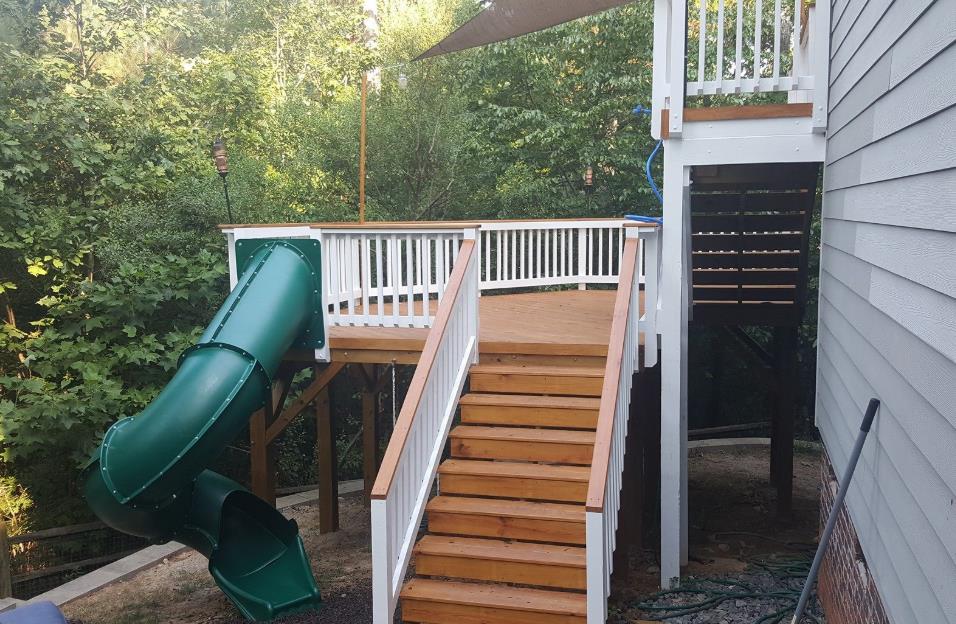
The work itself covers more than laying boards. A proper composite deck build includes footings sized for Mecklenburg County frost depth and soil conditions, a structural frame (often still pressure-treated lumber or steel), hidden fastener systems so the deck surface has no visible screw heads, and correct ventilation underneath to keep the frame dry. Railings, stairs, and fascia in matching composite trim are usually part of the quote too, and a permit and inspection should be part of any job that involves footings or attaches to the house.
When you're comparing builders, look past the sales pitch on the composite brand itself and pay attention to who's doing the framing, whether they pull permits, and how they handle ledger board attachment and flashing, since that's where most deck failures and water damage actually start. We score the 5 builders covering Charlotte on the fundamentals: license and insurance status, warranty terms on both labor and materials, review consistency over time, and responsiveness to the kind of questions a homeowner actually asks before signing a contract. See how we weigh each factor on the methodology page, or jump to the ranked list of Charlotte deck builders to see how these composite specialists stack up against builders who also work in wood.