
Composite vs wood decking: which is right for your Charlotte deck
By Rod Burnett · Updated 2026-06-12

Every builder in the composite decking category will tell you the same thing when you ask which material to pick: it depends on how long you’re staying and how much upkeep you want to do. Both pressure-treated wood and composite are solid choices in Charlotte’s climate. The right one comes down to budget, timeline, and your appetite for yearly maintenance.
Upfront cost
Pressure-treated wood is the budget option. It’s the material most base quotes use, and it’s easy to find in any board size. Composite, including Trex, TimberTech, and Fiberon lines, typically runs $35 to $60 per square foot installed, noticeably more than an equivalent wood deck. That gap is the main reason homeowners hesitate on composite, even when they’d prefer the lower maintenance.
Maintenance over time
This is where the comparison tips the other way. Most wood decks in the Charlotte area need restaining or resealing every 1 to 3 years, depending on sun exposure and the product used. Skip that maintenance and wood grays out, splinters, and starts absorbing water faster, which shortens its life. Composite decking just needs washing once or twice a year with soap and water. Composite boards also come in capped and uncapped constructions, with capped boards resisting stains and fading better, worth asking your builder about directly since it affects both price and how the deck ages.
Lifespan
A well-built, well-maintained pressure-treated deck typically lasts 15 to 25 years before major structural work is needed. Composite decking often runs 25 to 30 years, backed by manufacturer warranties in the 25 to 50 year range against rot, insect damage, and fading. In both cases, the framing underneath, usually pressure-treated wood either way, tends to need attention before the decking surface does, which is why substructure quality matters regardless of which material you choose on top.
| Pressure-treated wood | Composite | |
|---|---|---|
| Upfront cost | Lower | Higher |
| Maintenance | Restain every 1-3 years | Wash once or twice a year |
| Typical lifespan | 15-25 years | 25-30 years |
| Warranty | Varies by lumber treatment | Often 25-50 years |
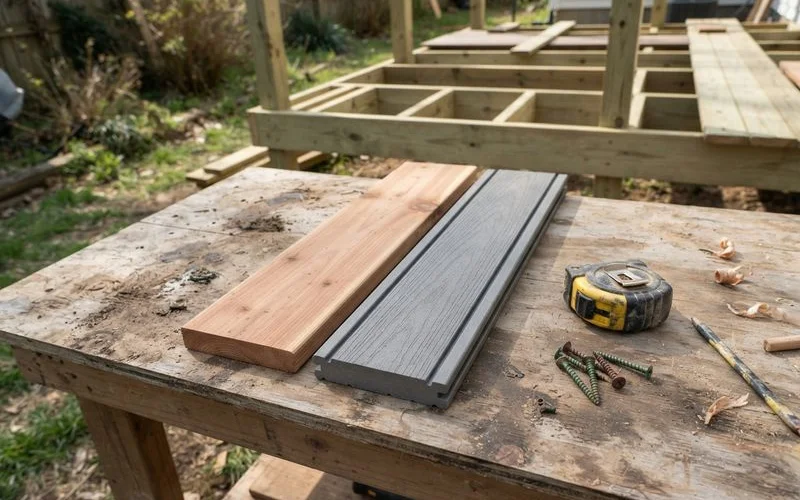
| Feel underfoot | Natural wood grain and warmth | Consistent, engineered texture |
Climate considerations for Greater Charlotte
Charlotte’s mix of hot, humid summers and occasional winter freeze-thaw cycles is hard on any exterior material, but it’s harder on wood. Untreated exposure, missed sealing years, or standing moisture underneath a low deck all accelerate wood’s decay. Composite resists moisture absorption and won’t warp or splinter the way wood can after a wet season, which is part of why it’s become the default choice for a lot of local homeowners tired of the upkeep cycle.
What each material actually feels like
Wood has a warmth and a natural grain that some homeowners simply prefer, and it takes stain or paint in a range of colors if you want to change the look down the road. Composite boards come pre-colored and don’t change easily, so picking the right shade upfront matters more. Underfoot, wood can feel warmer in cooler months but heats up more in direct summer sun, while composite’s behavior varies by brand and color, with darker boards running noticeably hotter on a July afternoon. If bare feet on the deck matter to you, ask to stand on a sample board in full sun before you decide.
How to decide
If you’re planning to sell within the next few years, or you want the lowest possible upfront cost and don’t mind a maintenance routine, pressure-treated wood is a reasonable choice. If you’re staying long-term, want to spend less time on upkeep, or you’re building a larger or elevated deck where labor costs already dominate the budget, composite’s higher material cost is easier to justify over the life of the deck.
Either way, substructure quality matters more than the surface material. Ask any builder how they handle joist spacing, flashing, and ventilation underneath, since a good frame under cheap decking will outlast a bad frame under expensive decking every time. Our methodology covers how we score builders on exactly these fundamentals, and you can browse Charlotte Deck Builder Guide to compare composite and wood specialists side by side.
Common questions
- Is composite decking worth the extra cost over wood?
- For most homeowners planning to stay in their house more than a few years, yes. You pay more upfront, but you skip the annual staining and sanding a wood deck needs, and composite typically carries a 25 to 50 year warranty against rot and fading.
- Does pressure-treated wood last as long as composite?
- Not usually. A well-maintained pressure-treated deck lasts 15 to 25 years, while composite decking often runs 25 to 30 years. Wood needs restaining every 1 to 3 years to hit the upper end of that range.
- Which material handles Charlotte's climate better?
- Composite generally holds up better through the region's humid summers and freeze-thaw winters, since it resists moisture absorption, warping, and insect damage better than untreated exposure of wood.
- Can I mix materials, like a composite deck surface with a wood frame?
- Yes, and it's common. Most composite decks are built on pressure-treated wood framing, since the substructure is hidden and the visible boards are what benefit most from composite's low maintenance.